
Blog
How To Buy a Motorbike in Hanoi Without Getting Ripped Off

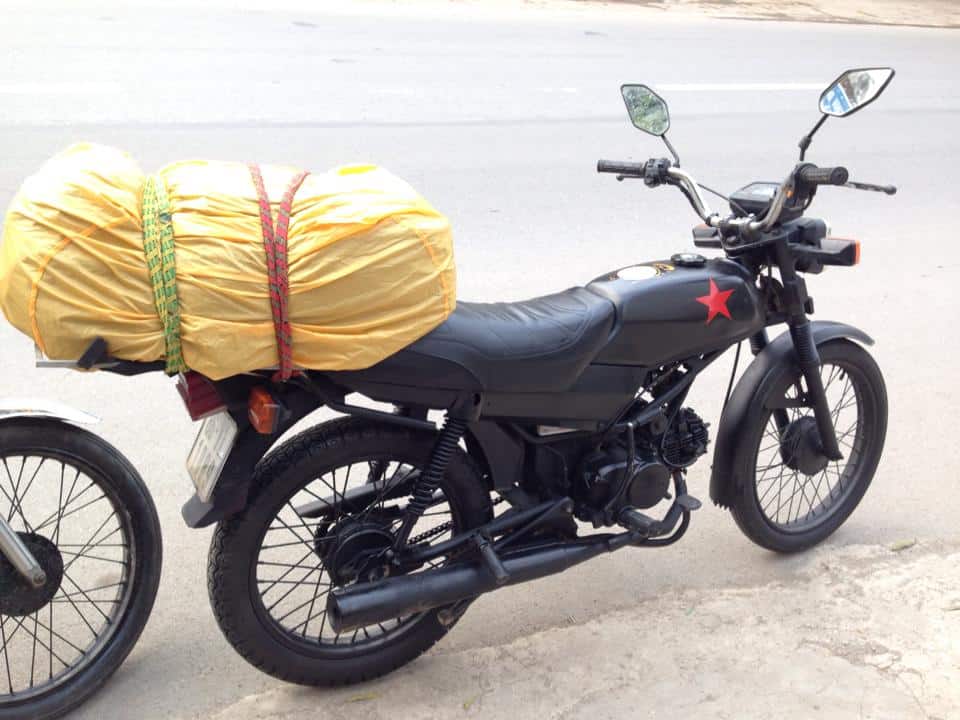
Buying a motorbike in Hanoi is one of the most popular ways to travel in Vietnam, especially for backpackers planning to ride north to Sapa or Ha Giang, or south to Ho Chi Minh City. But not every bike in the Old Quarter is worth the asking price.
After buying two bikes in Hanoi, including one that broke down on the Long Bien Bridge within minutes, here’s what I learned about where to buy, what to check, and how to avoid getting ripped off.
I first visited Vietnam in 2016. I’d spent a month in Laos with my best mate Jim, and we flew into Hanoi with no real plan beyond finding a hostel and figuring out what to do next.
We checked into Hanoi Backpackers that afternoon, and by that evening, we were sitting cross-legged on the floor of our dorm room with two American brothers from Chicago, Nick and Anthony.
They’d been talking about buying motorbikes and riding north into the mountains. None of them had ever been on a bike. I’d ridden a moped when I was 16 and thought I knew what I was doing, which of course I didn’t.
We went out for beers, and by the end of the night, the four of us had decided we were going. The next morning, we were out in Hanoi’s Old Quarter, looking at bikes. The morning after that, we left Hanoi.
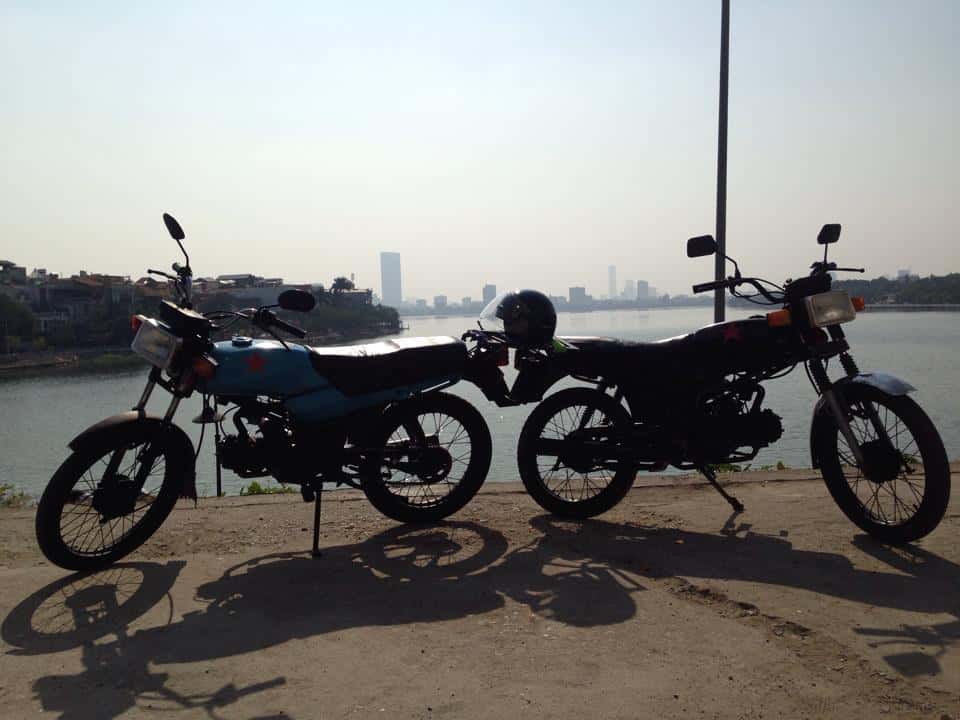
We were crossing the Long Bien Bridge, all four of us in a line with our bags strapped to the back, horns blaring, trucks passing close enough to touch.
The heat, the noise, the chaos of it all. I was absolutely buzzing. Then my engine cut out. Something to do with the carburetor, apparently, though I didn’t know what that meant at the time.
I managed to flag Nick down, and he rode ahead to get the others while I turned the bike around and pushed it back down the side of the bridge towards oncoming traffic. Not exactly the start I’d been hoping for.
I got the bike back to the shop and somehow managed to get all my money back. Within minutes, I’d found a replacement at another shop further down the street. I gave this one a much more thorough going-over than the first.
I’d have brought that second bike home if they’d let me take it on the plane. It took me north to Ba Be Lake, back to Hanoi, and then all the way through Central Vietnam to Ho Chi Minh City. Along the way, you can stop in places like Hoi An at your own pace, instead of rushing through by bus or plane.
Weeks on the road, through mountains and rice paddies and towns where we were the only foreign visitors in months. It cost me $200 to buy, and I sold it at the other end for $130, seventy dollars for the whole thing.
This is everything I wish I’d known before I handed over that first $200.
Quick checklist before you buy:
- Test ride the bike
- Check brakes, lights, and horn
- Verify the blue card matches the frame number
- Look for oil leaks and smoke
- Budget $50-$100 for repairs
- Upgrade to a full-face helmet before leaving Hanoi
Honda Win vs Other Motorbikes in Vietnam
If you spend five minutes looking into motorbikes in Vietnam, you’ll hear about the Honda Win. It’s the iconic backpacker bike. People talk about theirs the way you’d talk about someone you traveled with, not something you bought.
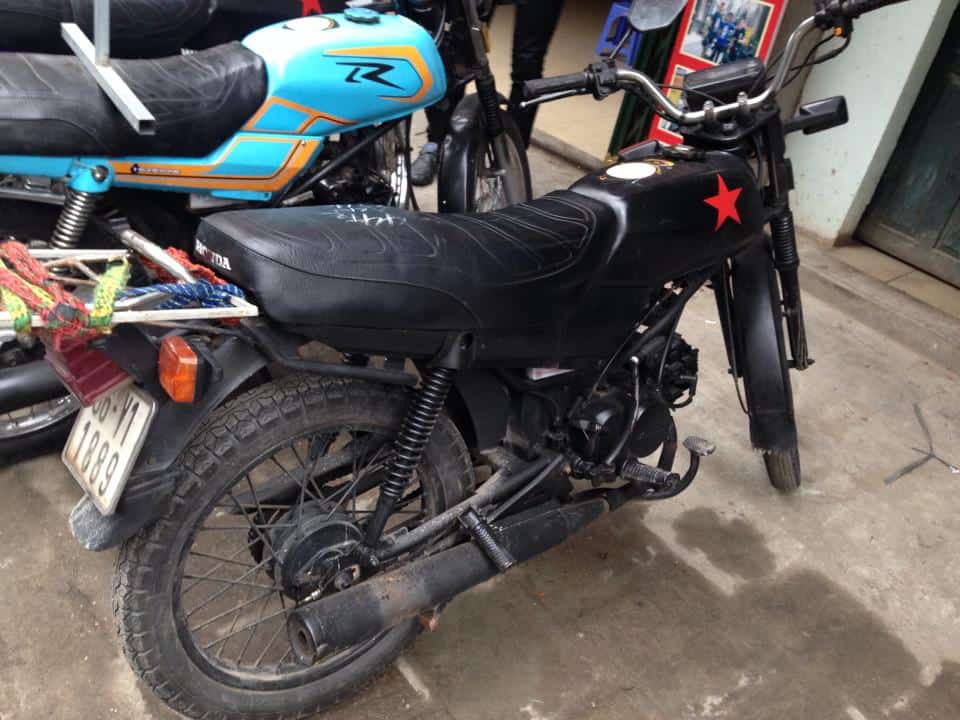
Here’s the thing, though. What’s being sold as a “Honda Win” in Hanoi today is either a Chinese replica or a bike that’s been through so many riders and repair shops that there isn’t a single original Honda part left on it. It’s the motorbike equivalent of the ship of Theseus.
At $200, it doesn’t really matter what the badge says. What matters is whether it starts, whether it stops, and whether it’ll get you from Hanoi to Ho Chi Minh City in one piece.
Where To Buy a Motorbike in Hanoi
This is the section that matters most. You’ve got three real options if you’re trying to buy a motorbike in Hanoi.
Motorbike Shops
Fair enough, here you go. The Old Quarter has several shops catering to backpackers. Phung Motorbike sits on Ngo Huyen, the main backpacker street. A few minutes away on Dao Duy Tu, Style Motorbikes is well respected in the expat community and sells used Detech Esperos for around $500 to $600.
For something cheaper, Thang Motorcycle Tours specializes in rebuilt Wins at around $350. It has branches in Hue, Ho Chi Minh City, and Hanoi, which matters if you want a warranty you can actually use on the way south.
A warranty sounds great, but unless you’re buying from somewhere like Thang, you’re not riding back to Hanoi to claim it. The real reason to buy from a shop is accountability. Someone has looked at the bike before selling it to you, and if it’s a disaster, they’ll hear about it on every Facebook group going.
If those prices feel steep, head to Phuc Tan street, about a ten-minute walk north of the Old Quarter along the Red River. There’s a cluster of shops there selling cheaper backpacker bikes. The online reviews for some of them are mixed, so do your homework and don’t hand over cash until you’ve checked the bike properly.
There’s also a helmet shop on that stretch, where we upgraded from the plastic buckets that came with our bikes to proper full-face helmets. Do this before you leave Hanoi. The bucket helmets are basically decorative.
The accountability thing isn’t theoretical. I bought my first bike from a shop on Phuc Tan for $200, and when it died on the bridge, I managed to get all my money back and found a replacement at another shop further down the street within twenty minutes.
Having a shop to go back to when something goes wrong immediately is worth more than you’d think.
Buying From Other Backpackers
This is often the best value, and the option I’d look into first. Travelers arrive in Hanoi every day, having just finished the ride from the south, and they’re looking to sell quickly because they’ve got a flight booked or their visa is running out.
You’ll find them in hostels, on Facebook groups, and sometimes just parked up on the street with a “for sale” sign taped to the seat.
The advantage here is honesty. Most backpackers will tell you straight what the bike was like on the trip, the breakdowns, the weird noises, the bits that got fixed along the way.
Suppose they traveled in a group, even better. Ask whose bike was the most reliable and whose was the least. It’s always a running joke in the group, and they’ll happily tell you everything.
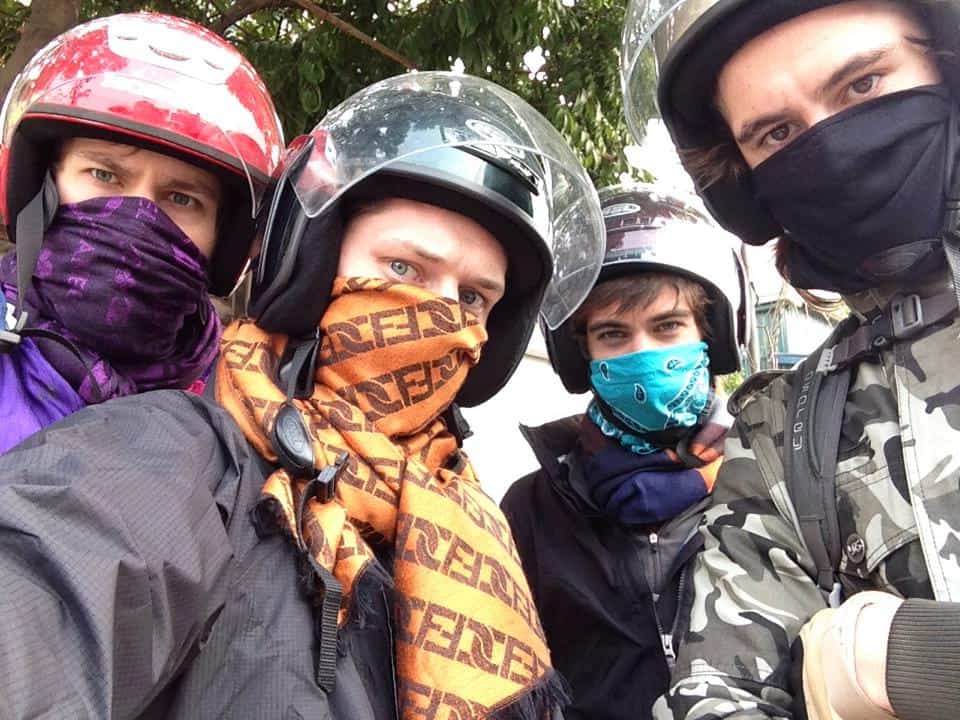
The downside is that these bikes haven’t been looked at since the last rider finished their trip. That’s easily solved.
Loads of small mechanic shops in the backpacker area will give a bike a once-over for next to nothing – change the oil, check the brakes, tighten some loose nuts, fix a dodgy speedo. It’ll cost you a few dollars, and it’s well worth doing before you set off.
Facebook Groups and Hostel Noticeboards
Groups like “Vietnam Backpacker Sales” and “Vietnam Motorbike For Sale” get multiple new listings every day. You can browse before you even arrive, which gives you a sense of what’s available and the going rate.
Chotot.vn is the Vietnamese equivalent of Gumtree and is worth checking too.
Backpacker hostels in the Old Quarter often have noticeboards with bikes for sale, or you’ll get chatting to someone in the dorm who mentions they’re looking to offload theirs.
Whichever route you take, always see the bike, ride it, and check it in person before handing over any money.
How To Check a Bike When You Know Nothing About Bikes
Most backpackers who buy a motorbike in Hanoi have never owned one before. That’s fine. You don’t need to be a mechanic. Here’s a simple checklist anyone can run through.
Start it up. Does it fire on the first or second kick? If it takes five or six attempts and sounds like it’s dying, walk away.
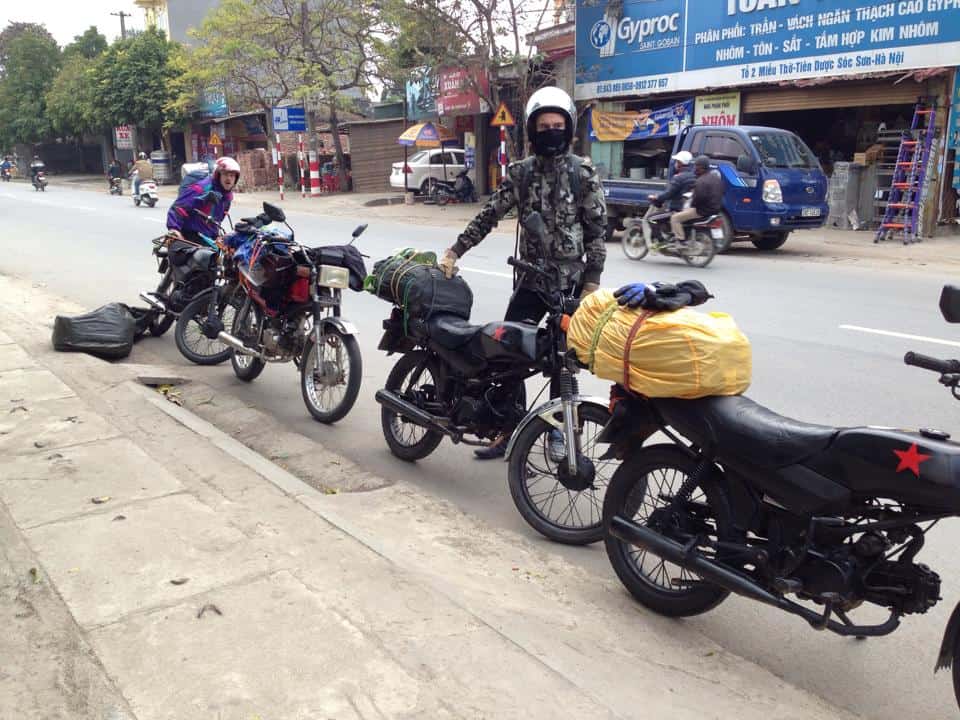
Listen to the engine. It should idle smoothly. Rattling, knocking, or grinding sounds are bad. Rev it a few times. The revs should rise cleanly and fall straight back to a steady idle, without hanging or sticking on the way down.
Check the exhaust while you’re at it. A bit of white smoke on a cold start is normal, but white smoke on a warmed-up engine means trouble. Blue smoke means it’s burning oil. Black smoke means the carburetor is off. Any of those, and you walk away.
Check for leaks. Look under the bike for oil or petrol drips. Check around the engine casing for wet patches.
Test ride it. Ride it in a straight line and loosen your grip on the handlebars. You’re feeling for two things: whether it pulls to one side (could mean a bent frame from a crash), and whether there are vibrations through the bars (can indicate worn headstock bearings).
Shift through all the gears. Pay special attention to finding neutral. If it struggles, that’s a common issue that tends to get worse.
Brakes. Test front and rear. They should respond firmly without squealing or grinding. You’d be amazed at what some of these bikes have going on with their brakes.
During one of our breakdowns, a mechanic changing the brake pads on a mate’s bike found folded-up Coke cans stuffed behind them to make them fit, because the pads were the wrong model.
That’s the kind of thing you’re dealing with. Your brakes will take a hammering in the mountains, so you need these to be solid.
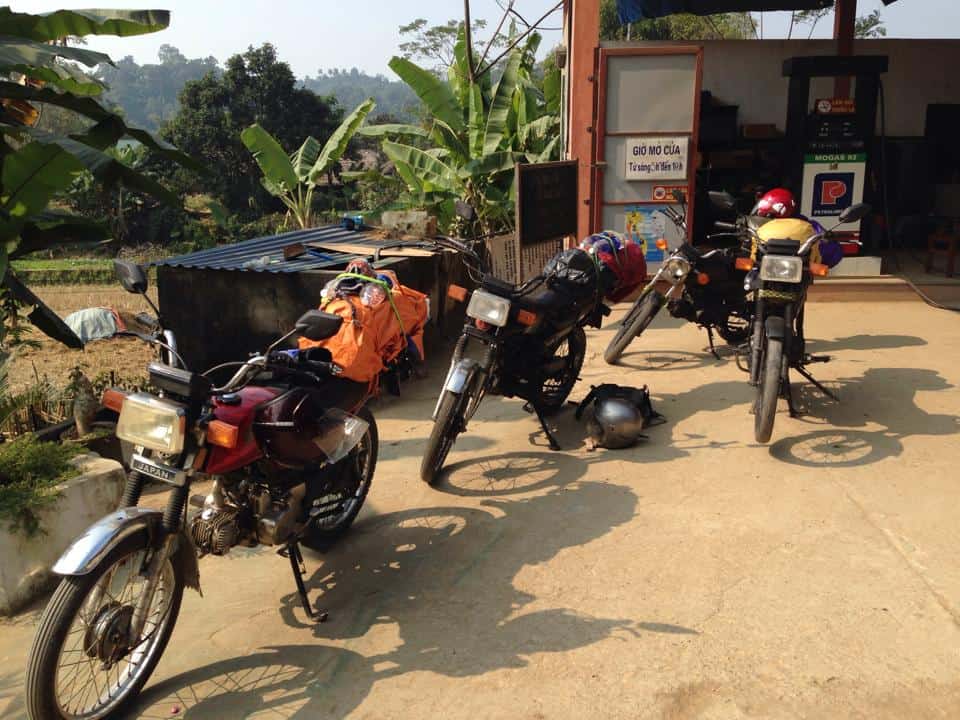
Tyres. Look for bald patches, cracks, or bulges.
Lights and horn. Headlight, indicators, brake light, and horn. The horn is not optional in Vietnam. Vietnamese drivers communicate with their horns, and you’ll use yours more than any other control. If it doesn’t work, get it fixed before you leave.
Look at the paint. A lot of these bikes get sprayed before being sold. Sometimes that’s cosmetic, sometimes it’s hiding corrosion, especially around the fuel tank. If the paint looks fresh and uniform, don’t be fooled. Run your hand over the tank and frame and feel for rough patches or bubbling.
The same goes for stickers. Feel the edges and make sure they’re not covering up dents, cracks, or rust.
Check the paperwork. The blue card numbers should match the chassis and engine numbers stamped on the bike. If they don’t match, walk away.
How Much Does a Motorbike Cost in Hanoi?
For a backpacker planning to buy a motorbike in Hanoi, ride across Vietnam, and sell it at the other end, $200 is the sweet spot. You want to spend enough that you’re not buying a disaster, but not so much that you’ll be devastated if it dies halfway through.
Shop prices for a Win run $300 to $400. Buying from another backpacker can be cheaper, sometimes $150 to $250. Have your budget in US dollars in cash; it makes the transaction simpler, and sellers tend to prefer it.
Budget another $50 to $100 for repairs. You will break down, and the good news is that it rarely costs much to fix. There are mechanics in virtually every town in Vietnam; look for signs saying “Honda” or “Rua Xe.”
Even when we broke down miles from anywhere in the mountains, we managed to coast the bike to a house where a man took the entire clutch apart, replaced what needed replacing, and put it back together while we sat and had dinner with his family. It cost about $10, and he refused to take any more.
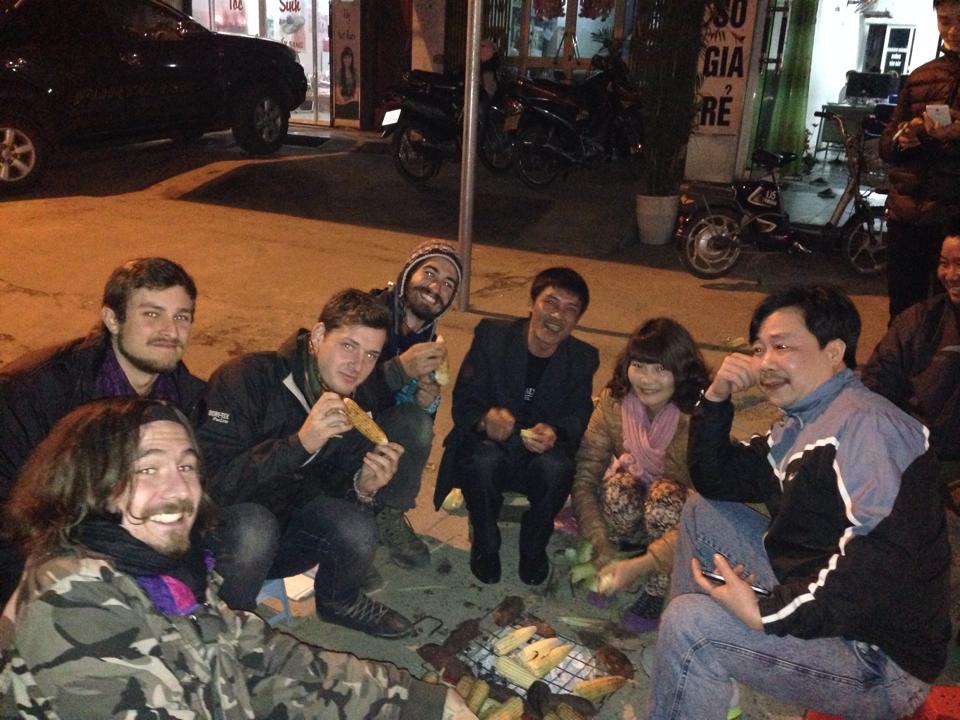
Don’t spend $500 on a bike if you’ve got months of traveling ahead of you after Vietnam. The cheap bike might break down more, but it’ll break down cheaply, and you’ll have better stories to tell.
Motorbike Paperwork, License, and Insurance in Vietnam
The blue card (Giay Dang Ky Xe) is the registration document for every motorbike in Vietnam. Think of it as the title deed. It lists the chassis number, engine number, registration plate, and owner’s name. It will have a Vietnamese name on it, not yours. That’s normal.
Foreigners can’t easily register bikes in their own names, so they pass them among travelers using the same blue card. As long as you have it, you’re effectively the owner.
Make sure the numbers on the blue card match the numbers stamped on the bike’s frame and engine. If they don’t match, the bike may have been stolen, or its paperwork swapped, and the police can impound it. Photograph the blue card and the seller’s ID before handing over any cash.
The other thing to be aware of is licensing and insurance. Vietnamese traffic police have been clamping down on foreign riders without valid licenses; fines can be significant, and if you’re riding without one, your travel insurance might not cover you if something goes wrong.
I’m not going to pretend to be an expert on the current rules. Before you leave, check your government’s travel advice and review the latest Vietnam motorbike license and IDP guide from Tigit Motorbikes to make sure you understand the risks you’re taking.
Editor’s note: Rules and enforcement can change, so always verify the latest licensing and insurance requirements before riding.
What To Buy If You Don’t Want a “Win”
The Win is a manual bike with a clutch. If you’ve never ridden before, that’s a steep learning curve on top of an already steep learning curve of navigating Vietnamese traffic.
Semi-automatics are a solid alternative. The Honda Wave is the most popular, practically indestructible, and has no clutch lever to worry about.
You still shift gears with your foot, but there’s no clutch coordination required. For a total beginner, it’s much less stressful. Honda Dreams are similar.
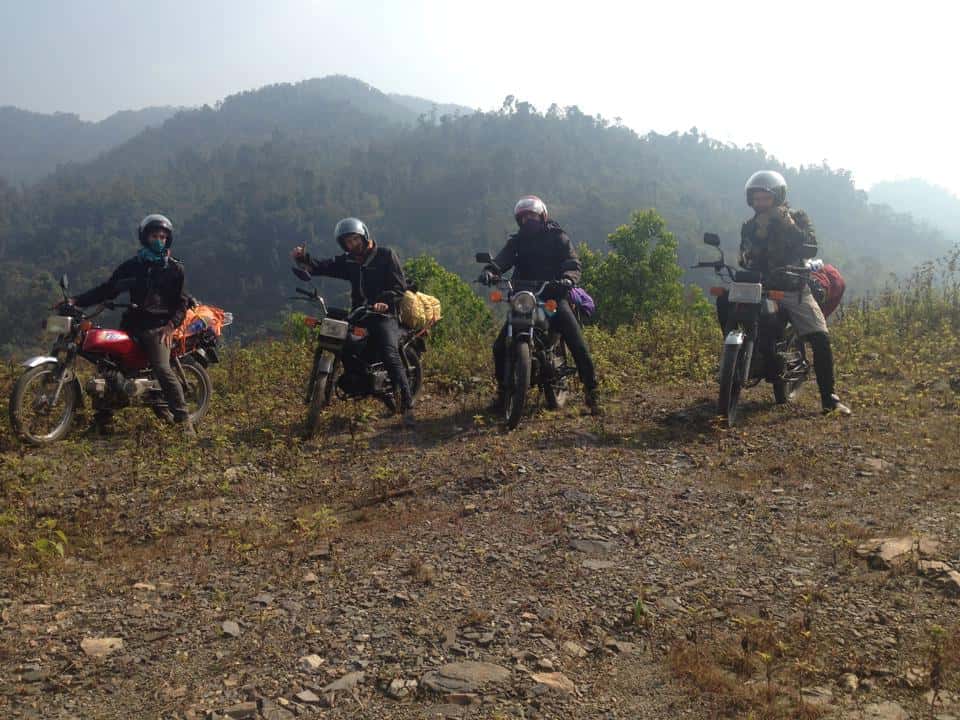
Full automatic scooters are the easiest to ride, but they struggle in the mountains and lack the power for a loaded-up cross-country trip.
If you’ve got a bigger budget, companies like Tigit Motorbikes and Rentabike Vietnam offer one-way rentals on proper bikes, with pickup in Hanoi and drop-off in Ho Chi Minh City.
It costs more than buying a beater, but you skip the buying-and-selling hassle entirely, and if something goes wrong, you’ve got someone to call.
How To Sell Your Motorbike in Ho Chi Minh City
When you reach Ho Chi Minh City, you need to offload the bike. Post it on Facebook groups like “Vietnam Backpacker Sales,” be honest about the condition, and price it 10 to 15% higher than what you actually want.
Everyone negotiates. Throw in your helmet, bungee cords, and phone mount to sweeten the deal.
There are also shops along the backpacker streets in HCMC with signs saying they buy bikes. That’s what I did. They offered me $130. I’d paid $200 in Hanoi. The bike had taken an absolute battering on the way down, and I was happy with $130 – just $70 for the whole trip.
Jim had a slightly different experience. We’d left his bike at a repair shop one afternoon and went to find food.
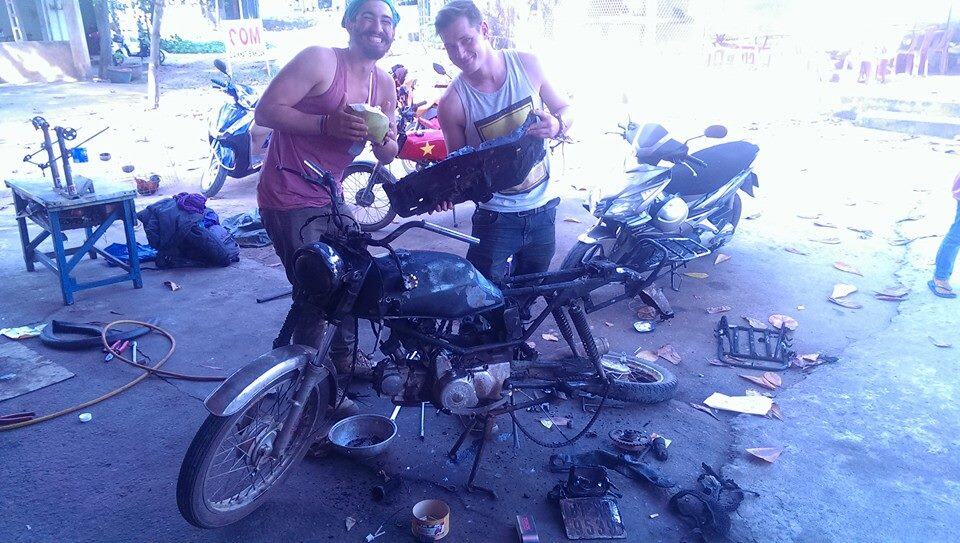
Walking back, we could see black smoke rising from roughly where the shop was. We joked that it was Jim’s bike on fire. When we got back, Jim’s bike was on fire. Burnt to a crisp.
The guys in the shop were already working frantically to strip it down to the frame. They couldn’t save it, so they ended up giving him a semi-automatic scooter to finish the trip.
He sold that in HCMC for about $100. Not bad for a bike that was technically a replacement for a bike that no longer existed.
The $70 Trip
The four of us stayed together all the way to Ho Chi Minh City and then carried on into Cambodia before Nick and Anthony flew home to Chicago. We still keep in touch.
Two lads we met on the floor of a hostel dorm room became some of the best friends I’ve ever made, and none of it would have happened if we hadn’t walked into a bike shop the next morning.
In one of the towns up north, out in the sticks, we were out looking for somewhere to get a drink when we stumbled across a wedding happening in a marquee in the middle of a small town.
The moment someone spotted us, they were waving us in, sitting us down, pouring rice wine before we’d even had a chance to introduce ourselves.
Nobody spoke a word of English, and we didn’t speak a word of Vietnamese, so everything happened through gestures and laughter. They taught us their toasts.
We joined in without understanding any of them. We ended up singing Dancing Queen on karaoke, and I’ve still got a photo with the bride and groom. None of that would have happened on a bus.

There’s also something about rolling into these mountain towns four abreast on loud bikes that makes you feel like the coolest person on earth. You’re not.
You’re sunburnt, your clutch cable is held together with duct tape, and you haven’t showered in days. But for a few seconds, pulling into a town square with the engines echoing off the mountains, you absolutely are.
The whole trip cost me $70 in bike money and maybe another $50 in repairs. I’ve spent more on a night out in London.
If you’re sitting in a hostel in Vietnam right now reading this and wondering whether to do it, stop wondering. Go and buy a bike. Just check the brakes for Coke cans before you set off.